Double Materiality Matrix & ESG Risk Management
Materiality Assessment Governance
To ensure that sustainability management reflects PharmaEssentia's business characteristics, stakeholder expectations, and emerging sustainability trends, the Company conducts a materiality assessment on an annual basis.
The materiality assessment process incorporates input from both internal and external stakeholders and applies a double materiality approach to evaluate sustainability topics from the perspectives of impacts on the economy, environment and society, as well as impacts on the Company's operations, strategy, and long-term value creation.
The assessment results are integrated into PharmaEssentia’s sustainability governance and Enterprise Risk Management (ERM) processes. Identified material topics, risks, and opportunities are reviewed by management and linked to relevant management objectives and action plans.
The results of the materiality assessment are reported to and reviewed by the Board of Directors, which oversees the Company’s sustainability strategy and major sustainability-related risks and opportunities.
Material Issues and metrics for Enterprise Value Creation
Material Issues
Access to Medicine
Drug Quality and Safety
Doctor-Patient Relationships and Local Empowerment
Business Case
Opportunity
Risk
Opportunity
Business Impact
PharmaEssentia is committed to helping patients access the medicines they need in a reasonable, affordable, accurate, and convenient manner, thereby strengthening the resilience of healthcare systems, building brand trust, and expanding market reach.
Drug quality and safety are key risks for PharmaEssentia, as they directly affect patient safety, regulatory compliance, and the Company's ability to obtain and maintain marketing authorization for its products. Deficiencies in R&D, manufacturing, or post-marketing surveillance may result in adverse events, product recalls, regulatory actions, or reputational damage, which could in turn adversely affect the Company's revenue and long-term operations.
The Company places great importance on fostering strong patient-healthcare provider relationships in local communities. Through health promotion, medical education, and collaboration with primary healthcare providers, the Company strengthens local healthcare resources and health awareness, enhances community care capacity and healthcare resilience, and further builds local trust while fulfilling its corporate social responsibility.
These efforts not only help build local trust and fulfill corporate social responsibility, but also enable PharmaEssentia to create a positive impact in the field of myeloproliferative neoplasms (MPN), while generating new business opportunities for its global strategic expansion and product development.
Business strategies
PharmaEssentia expands access to its medicines for more patients with myeloproliferative neoplasms (MPN) worldwide by promoting participation in global clinical trials, advancing compassionate use programs, obtaining regulatory approvals in multiple countries, and ensuring fair and reasonable pricing.
By maintaining reasonable pricing and ensuring safety throughout the drug development process, the Company is able to obtain marketing authorization in various countries, thereby driving revenue growth.
PharmaEssentia comprehensively manages drug quality and safety risks by establishing a global pharmacovigilance system, strengthening GMP/GDP quality management, and expanding manufacturing capacity in compliance with international regulatory requirements, thereby supporting its global market expansion and product commercialization strategies.
The Company implements Patient Support Programs in Taiwan, the United States, and Japan to provide BESREMi medication consultation services for patients with myeloproliferative neoplasms (MPN). In addition, the Company regularly organizes the MPN Asia International Symposium to facilitate the exchange of clinical experience and the sharing of the latest medical knowledge among healthcare institutions, academic organizations, and patient communities.
Target/Metric
1. Patient-Healthcare Provider Relationships and Patient Support: Number of patients benefiting from the programs: >15,000
2. Access to Medicines: Number of countries where marketing authorization has been obtained: >40
1. Ensure 100% compliance of the adverse drug reaction reporting process with internal SOPs
2. Employee training rate for "Pharmacovigilance" = 100%
3. No product recalls
Healthcare Support and Local Capacity Building in Global Markets: Health education activities conducted: >15
Target Year
2026
2026
2026
Progress in 2025
2025 Achievements:
1. Benefited over 18,000 patients.
2. Obtained regulatory approvals in 40 countries.
2025 Achievements:
1. Ensure 100% compliance of the adverse drug reaction reporting process with internal SOPs
2. Employee training rate for "Pharmacovigilance" reached 100%
2025 Achievements:
Held 30 health education events.
Executive Compensation
PharmaEssentia links the performance indicators of the Chairman, CEO, and General Manager to sustainable development. Key performance indicators include innovative new drug development, global pivotal clinical trials, drug registration and market authorization applications, product quality and patient safety, patient engagement and community empowerment, strengthening global commercial strategies and operations, and advancing corporate social responsibility and sustainability performance.
Material Issues for External Stakeholders
Material Issue for External Stakeholders
Energy and Waste Management
Doctor-Patient Relationships and Local Empowerment
Cause of the Impact
Operations
Products/services
Operations
Products/services
Business activity coverage
>50% of business activity
>50% of business activity
External stakeholder(s)/impact area(s) evaluated
Environment
Society
Society
Consumers/end-users
Output Metric
In 2025, PharmaEssentia Taiwan recorded total greenhouse gas emissions of 7,116 tCO₂e.
A total of 170 sessions were conducted, reaching approximately 2,000 direct beneficiaries on a cumulative attendance basis.
Impact Valuation Method
Social cost caused/avoided: PharmaEssentia has implemented an impact valuation approach to assess its external impacts by quantifying the social cost of carbon associated with its operational greenhouse gas emissions. The Company will continue to enhance energy efficiency and strengthen the management of climate-related issues.
Social return on investments: By supporting remote health promotion and facilitating access to healthcare resources, PharmaEssentia enhances older adults' health literacy and self-management capabilities, improves access to healthcare, reduces health inequalities, strengthens community support, and alleviates potential healthcare and caregiving burdens, thereby creating long-term social value.
Impact metric
Based on the Company's total greenhouse gas emissions in 2025, the estimated social cost of carbon was TWD 17,036,366.
The impact of this issue is measured using indicators such as improvements in health literacy, access to healthcare, and quality of life. Based on a monetized assessment, the net social value generated was approximately NT$7,429,568.
Process for Identifying Material Topics
Step 1: Clarify organizational context
Identify sustainability topics
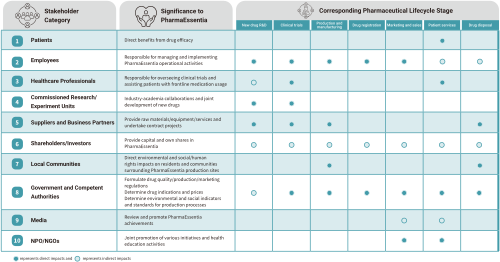
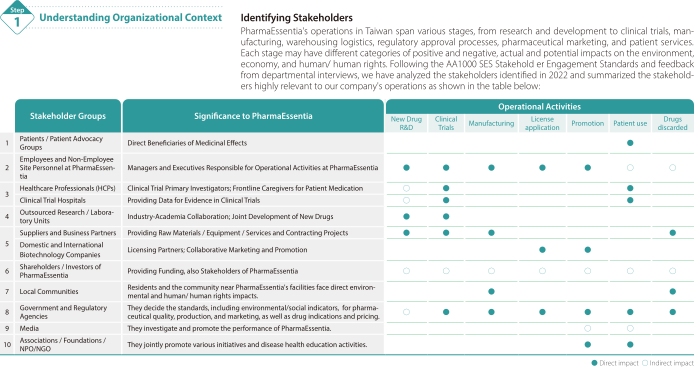
PharmaEssentia clarified organizational context by combining strategic focuses and stakeholder topics of concern while referencing disclosure requirements listed in GRI standards, SASB standards, and international sustainability ratings (S&P CSA, MSCI), as well as sustainability topics disclosed by domestic and foreign peers. In 2025, we compiled 13 sustainability topics encompassing product, governance, social, and environmental aspects.
Step 2: Identify actual and potential impacts
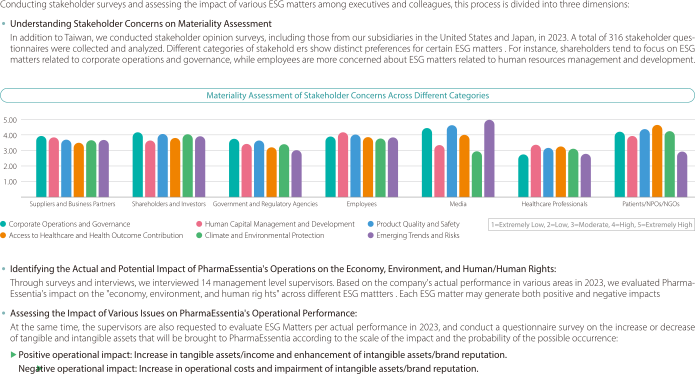
PharmaEssentia distributed external sustainability impact assessment surveys to the ten types of stakeholders and senior executives to assess potential positive and negative environmental, economic, and social impacts from sustainability topics, as well as likelihoods of occurrence. We collected a total of 193 completed surveys. PharmaEssentia senior executives also filled out internal operational impact assessment surveys to assess potential positive and negative operational impacts from sustainability topics, as well as likelihoods of occurrence. We collected a total of 23 completed surveys.
Step 3: Identify impacts and assess significance
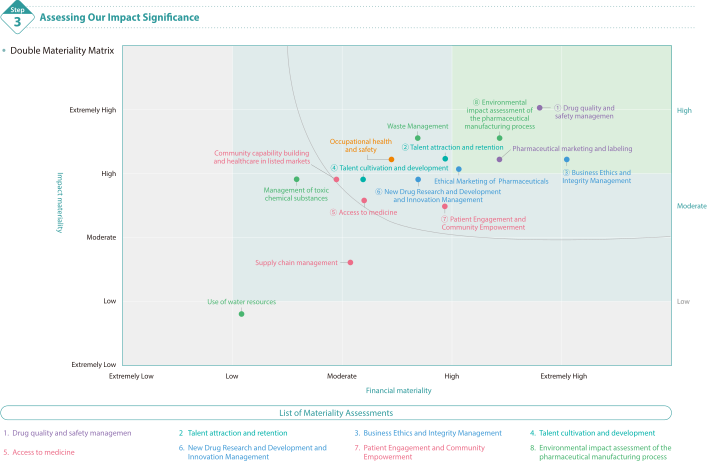
Topics were ranked by “Level of economic, environmental, and social impacts (sustainability impact assessment ranking),” “Level of operational impacts (operational impact assessment ranking),” and positive and negative impacts based on survey results.

Step 4: Identify impacts and assess significance
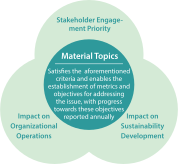
Combined sustainability impact and operational impact assessment ranking results were discussed by the Executive Center for Corporate Sustainability and management personnel. Based on stakeholder weights and perspectives, a total of 9 material topics were determined and were reported to the board. Material topic rankings and comparisons with topic rankings for the previous year are shown below:
Step 5: Compile list of material topics
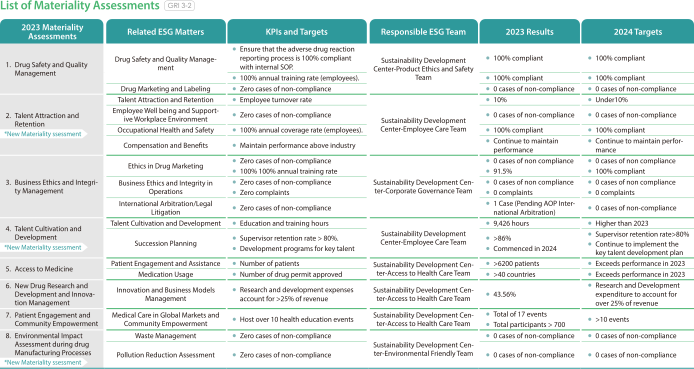
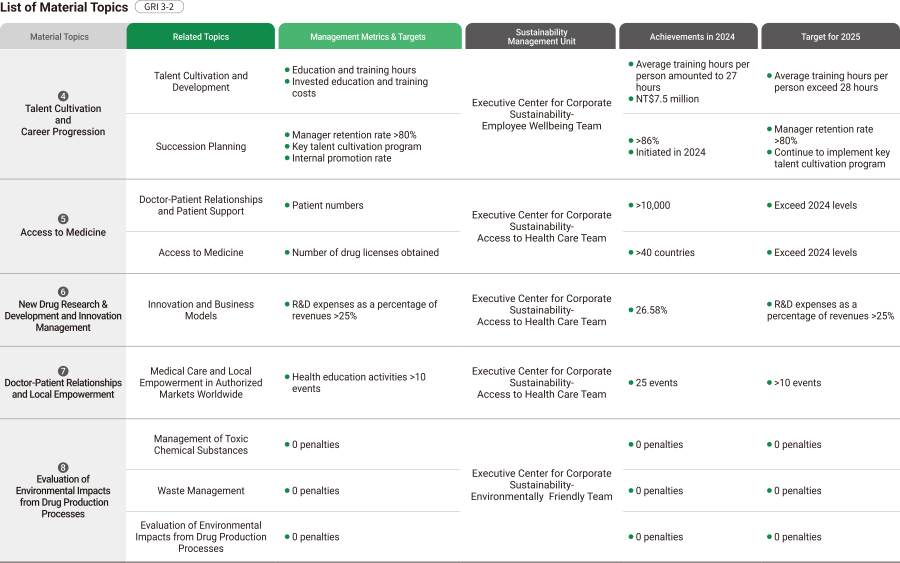
PharmaEssentia formulated management metrics and targets for all 9 material topics. We review progress on all metrics/targets each year to facilitate timely tracking and management of our sustainability performance, and also clearly define the responsible units for each metric to ensure effective target implementation.
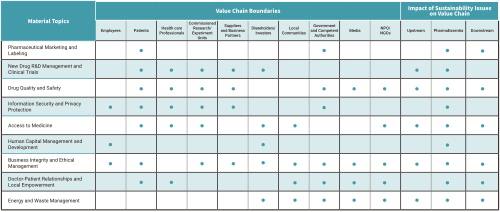
Value Chain Boundaries for Material Topics
Material Issues for External Stakeholders